News & Insights
Why Intelligent Plant Controllers Are Essential for Modern Renewable Energy Plants
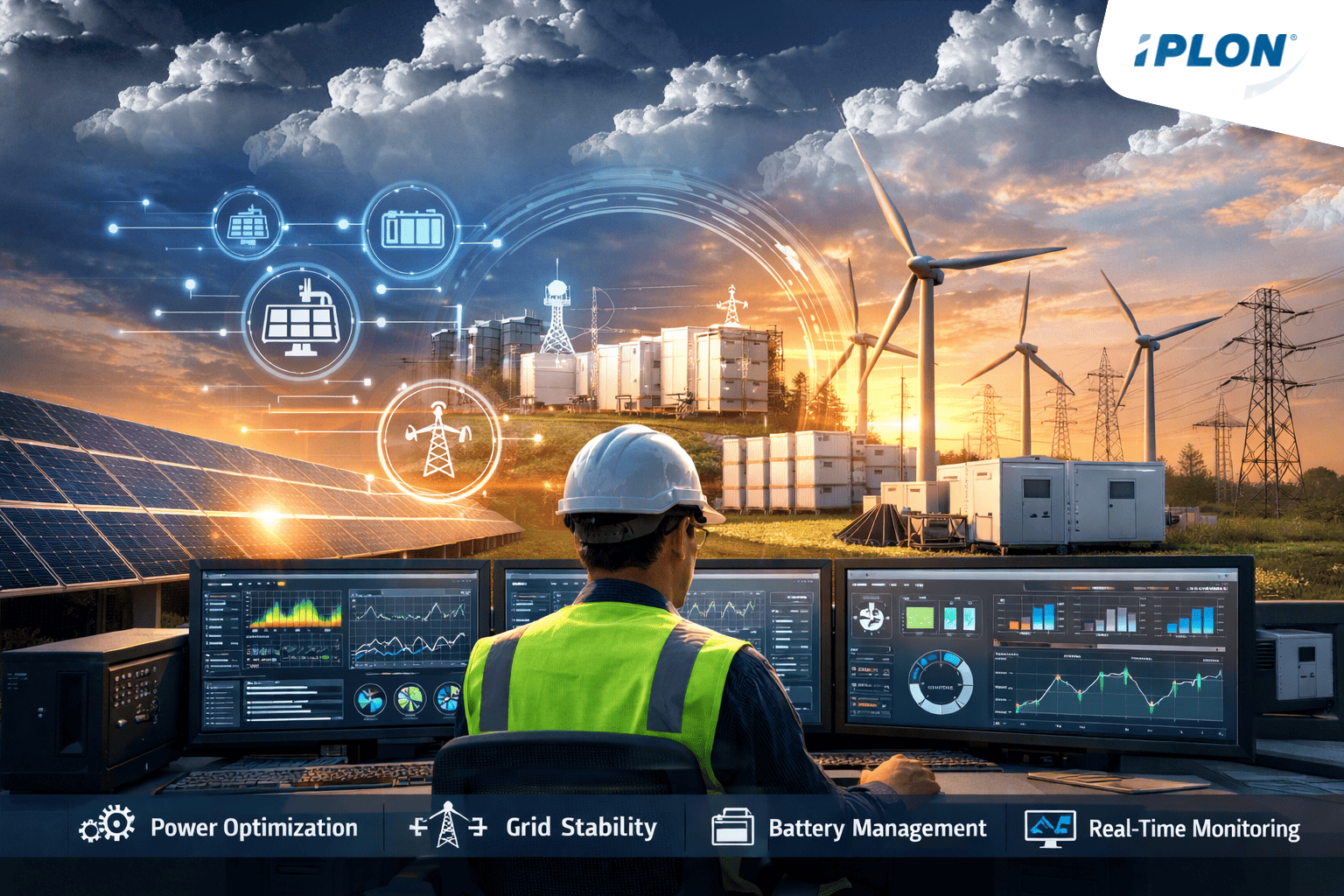
The global energy landscape is rapidly evolving as renewable
energy adoption continues to grow. Solar power plants, hybrid energy systems,
and battery-integrated projects are becoming increasingly common across
utility-scale and commercial installations.
However, generating renewable energy is only part of the
challenge. Integrating these energy sources into the power grid requires intelligent
control, real-time monitoring, and precise coordination.
This is where advanced plant-level control systems such as Plant Power Controllers (PPC), Hybrid Power Plant Controllers (HPPC), and Energy Management Systems (EMS) play a crucial role.
The Challenge of Renewable Grid Integration
Unlike conventional power plants, renewable energy sources
such as solar and wind are variable and dependent on environmental
conditions. Changes in irradiation, weather patterns, or load demand can
cause fluctuations in power generation.
To maintain grid stability, utilities and grid operators
enforce strict operational requirements for renewable power plants, including:
- Active
and reactive power control
- Voltage
regulation
- Frequency
response
- Ramp
rate control
- Compliance
with grid codes
Managing these requirements manually is nearly impossible for modern renewable plants. Instead, plants rely on automated control systems to maintain stable and compliant operations.
The Role of Plant Power Controllers (PPC)
A Plant Power Controller (PPC) acts as the central
control system of a renewable energy plant.
It continuously communicates with inverters, meters,
transformers, and grid interfaces to ensure that the plant operates according
to grid operator commands and predefined operational limits.
Key functions of a PPC include:
- Active
and reactive power regulation
- Voltage
and frequency control
- Ramp
rate management
- Grid
code compliance
- Curtailment
handling
By coordinating the operation of multiple inverters and plant components, PPC systems ensure smooth power delivery and grid stability.
Managing Hybrid Energy Systems with HPPC
As renewable projects evolve, many installations now combine
solar PV, battery energy storage systems (BESS), diesel generators, and grid
connectivity.
These hybrid configurations require a more advanced control
architecture known as a Hybrid Power Plant Controller (HPPC).
HPPC solutions intelligently coordinate energy flow between
multiple power sources, enabling:
- Optimal
renewable energy utilization
- Intelligent
battery charging and discharging
- Seamless
transitions between grid-connected and island operation
- Improved
reliability and energy resilience
By dynamically balancing energy sources, HPPC systems allow hybrid plants to deliver stable and dispatchable power despite the variability of renewable generation.
The Importance of Real-Time Monitoring and Data
Modern renewable plants rely heavily on real-time
monitoring and performance analytics to maintain optimal operations.
Advanced control systems integrated with monitoring
platforms enable operators to track:
- Generation
performance
- Equipment
health and status
- Grid
interaction parameters
- Alarms
and fault diagnostics
Access to real-time operational data allows plant operators to identify issues quickly, optimize plant performance, and reduce downtime.
Enabling the Future of Smart Energy Systems
As renewable penetration increases, intelligent control
systems will become even more critical for ensuring reliable and efficient
energy delivery.
Technologies such as PPC, HPPC, and EMS enable
renewable plants to participate in emerging energy models such as:
- Hybrid
renewable energy systems
- Virtual
power plants
- Distributed
energy networks
- Advanced
grid support services
By combining intelligent control, data-driven insights, and seamless integration between energy assets, these technologies form the foundation of modern digital energy infrastructure.
Conclusion
Renewable energy plants today require more than just
generation capacity. They require advanced control, coordination, and
monitoring to operate efficiently and remain compliant with grid
requirements.
Intelligent plant controllers ensure that renewable energy
systems are stable, reliable, and capable of supporting the evolving needs
of modern power grids.
As renewable adoption continues to grow worldwide, solutions
that enable smarter energy management will play a vital role in shaping the future
of sustainable power systems.
Search
Recent Posts